Customers
British Columbia Institute of Technology
Learn how BCIT combined AppsAnywhere and LabStats to turn campus IT data into smarter decisions about software, hardware, and space.


How BCIT Used IT Data to Optimize IT Resources, Drive Smarter Investment, and Strengthen Student Access
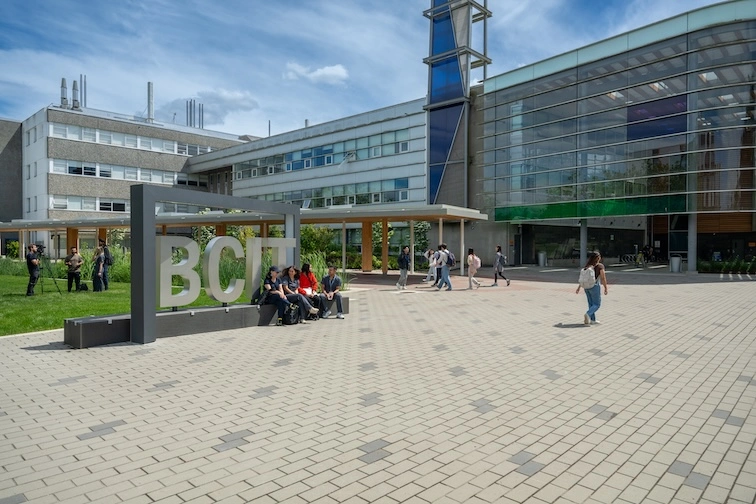
The British Columbia Institute of Technology is one of Canada's largest polytechnic institutions, serving tens of thousands of students across programs in engineering, health sciences, business, computing, and the trades.
In a discussion with Ed Grof, Manager and Tony Koo, Product Owner, we learn how the institute transformed its digital landscape by integrating AppsAnywhere and LabStats to solve complex challenges in software delivery and space utilization.
By moving away from costly, underperforming Virtual Desktop Infrastructure (VDI), BCIT has created a "best-in-class" environment focused on performance and student equity.
BCIT utilizes AppsAnywhere as its primary software delivery method, offering a catalog of over 400 applications. It serves as a "one-stop shop" where students can find any required software, whether they are in a physical lab or working remotely. LabStats complements this by providing granular data on hardware utilization and powers a custom portal that shows students real-time computer availability.
BCIT began using LabStats to address practical visibility issues that were apparent but difficult to substantiate. The IT team observed that some labs were underutilized, even during busy periods on campus, and required objective data about how lab spaces, hardware usage, and hybrid delivery patterns were changing.
LabStats gave them the usage data needed. It also helped BCIT monitor computer status so machines that were down or unplugged could be restored before classes began, turning what had been reactive support into a more proactive operating model.
The value extended beyond monitoring. Because software delivery is built around AppsAnywhere, BCIT wanted students to access software without being tied to a specific room. Tony explains that moving to a common base image with AppsAnywhere as the source for applications created more flexibility, so students and instructors were no longer restricted to designated labs for specific software. That same setup also gave the team better insight into whether expensive hardware was actually being used for demanding applications, which in turn supported smarter hardware allocation.
The result is a set of connected use cases rather than a single deployment story:
"We noticed that in some labs, 70-80% of our most expensive machines were being pushed aside by students who preferred their own laptops. That insight allowed us to pivot toward 'hybrid labs' and docking solutions, saving thousands in unnecessary hardware refreshes." shared Ed Grof
The biggest pressure point was BCIT’s cloud VDI environment. It was not only expensive, but it was also getting in the way of teaching due to long launch times that could reach 15 to 20 minutes, with inconsistent performance. In practice, that meant students were waiting too long to get working, and in some cases, programs moved students back on campus just to access the software they needed.
The performance problem was only part of it as BCIT’s environment is built around broad software access through AppsAnywhere, not a narrow set of fixed-purpose virtual machines. Students are used to choosing from a catalog of 400 apps, so trying to recreate that in VDI was prohibitive, and it pushed students back toward a more restricted experience where software had to be specially requested.
There was also the administrative burden of maintaining a separate VDI environment with its own images and policies, effectively duplicating work already being done for physical labs.
"I am absolutely dead set against duplication of effort. By moving away from VDI and leveraging AppsAnywhere and LabStats, we stopped 'babysitting' multiple environments and started managing our entire software catalog from a single source." – Ed Grof
BCIT’s answer was to shift away from general-purpose VDI and instead use LabStats-enabled RDP access into on-campus lab machines. That approach gives remote users access to hardware already configured and optimized for AppsAnywhere, while avoiding the cost and complexity of maintaining a parallel virtual estate. BCIT has retained VDI only for niche, instructor-controlled scenarios that require persistent data.
“Remote access through LabStats is virtually the same experience as sitting directly in front of the machine “ - Ed Grof.
What BCIT has built is a circular IT operating model through two complementary solutions that reinforce each other: AppsAnywhere and LabStats.
AppsAnywhere acts as the main software delivery layer: a single place where students can find what they need, whether they are on campus or remote. It’s the “one-stop shop” for everything, from AutoCAD to ZBrush. LabStats adds the access intelligence and operational layer around that: utilization data, machine availability, remote access, and APIs that support BCIT in building a better student-facing experience.
Students benefit from a secure and straightforward BYOD setup: they access a portal to locate an open workstation, sign in with RDP, and launch their required software through AppsAnywhere. For those using low-spec devices or Chromebooks that can't run demanding applications like Adobe Premiere locally, RDP lets them tap into the processing power of campus computers instead.
Compared with the previous setup, this is a game changer. BCIT no longer has to mirror its software delivery effort across physical labs and a separate VDI estate. It can use the same image and policies for both in-person and remote access, which makes it much easier to scale. It enables the shift from fragmented delivery and duplicated effort to a single, coordinated software delivery ecosystem, which resource-strapped institutions need more than ever.
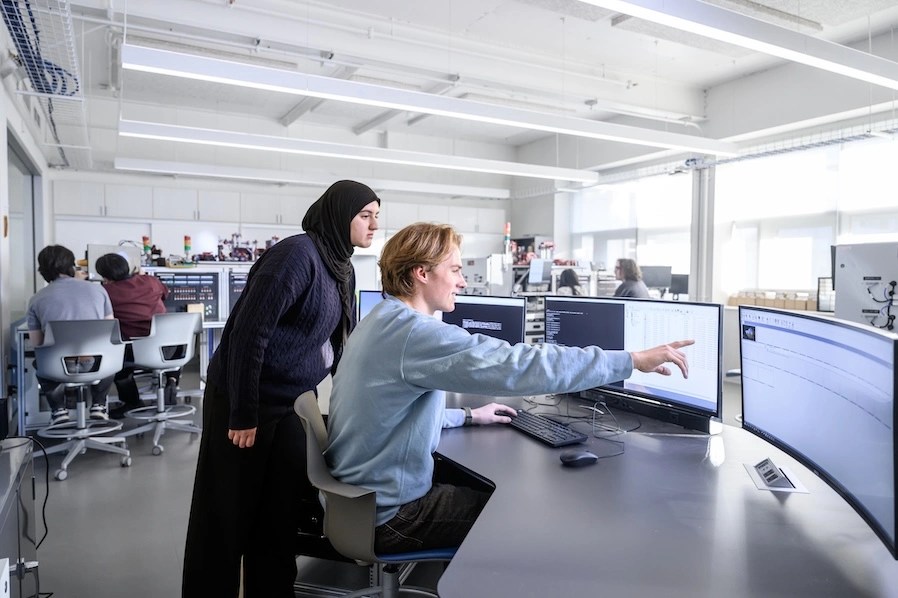

The benefits of this elegant solution show up in staffing efficiency, financial savings, performance, and student access.
BCIT expects a 60% reduction in VDI after the transition, resulting in cost savings. Operations are streamlined: instead of 20 people managing distributed labs, now only four or five handle tasks centrally.
Hardware procurement has become evidence-led rather than assumption-led. AppsAnywhere Analytics and LabStats together revealed that high-spec machines in general-use labs were frequently being used only for basic tasks.
BCIT used this to reduce performance specifications for general-use devices, where students notice no difference, and redirect those savings toward specialty labs in areas like Digital Arts and Engineering where high-tier compute is genuinely needed. With hardware costs rising 35% since November, this reallocation has enabled the team to meet hardware demands within its existing budget.
The equity impact matters just as much. BCIT maintains a thoughtful BYOD policy, so students arrive with a wide mix of personal devices. This model allows students on Macs, Chromebooks, and lower-spec laptops to access powerful Windows-based applications by connecting to lab machines remotely, rather than being limited by the hardware they personally own.
That combination of efficiency and access is rare: fewer duplicated systems for IT, better performance for students, and wider access to specialist software without forcing every learner into the same device model.
Now in its third year of LabStats deployment, BCIT is in a great place to build on its foundation.
On the student-facing side, the team is building a custom web interface using LabStats APIs that will surface real-time machine availability across campus, categorized by device capability - including GPU-equipped stations - so students can find the right machine for their specific task without guesswork. Plans to integrate LabMaps with BCIT's institutional UI will take this further, embedding live lab availability directly into the student experience.
Strategically, the data is beginning to flow beyond the IT team. LabStats usage data is powering timetabling conversations, with the scheduling department using it to optimize how space is allocated across the institution.
BCIT is embarking on an exploratory initiative, leveraging three years of historical utilization data to develop a formal business case that examines the possibilities for reducing its general lab footprint. Through this data-driven approach, the team anticipates unlocking future operational efficiencies and cost savings, setting the stage for ongoing innovation and optimization across the institution.
Looking further ahead, Ed and Tony see software utilization data as the basis for structured conversations with faculty and academic departments, identifying which licensed applications are actually being used, which are being over-licensed, and where curriculum requirements and actual student software behaviour diverge. That conversation has significant implications for licensing spend and for aligning software investment with genuine academic need.
Want to see how AppsAnywhere and LabStats could help your institution simplify software delivery, improve student access, and make better use of labs and licenses? Get in touch to explore what a joined-up approach could look like in your environment.
Learn how BCIT combined AppsAnywhere and LabStats to turn campus IT data into smarter decisions about software, hardware, and space.


Sign up to our newsletter.
AppsAnywhere is a global education technology solution provider that challenges the notion that application access, delivery, and management must be complex and costly. AppsAnywhere is the only platform to reduce the technical barriers associated with hybrid teaching and learning, BYOD, and complex software applications, and deliver a seamless digital end-user experience for students and staff. Used by over 3 million students across 300+ institutions in 22 countries, AppsAnywhere is uniquely designed for education and continues to innovate in partnership with the education community and the evolving needs and expectations of students and faculty.


Register your interest for a demo and see how AppsAnywhere can help your institution. Receive a free consultation of your existing education software strategy and technologies, an overview of AppsAnywhere's main features and how they benefit students, faculty and IT, and get insight into the AppsAnywhere journey and post launch partnership support.